












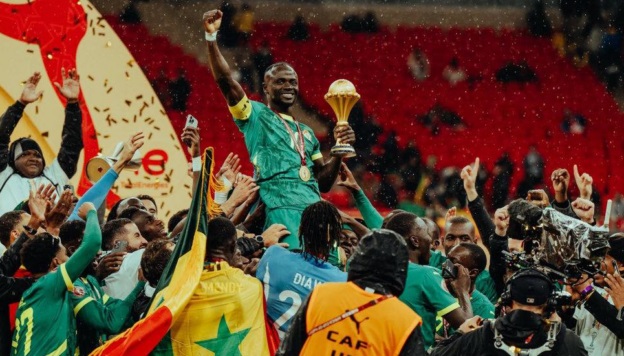
The Senegalese Football Federation (FSF) has rejected the decision of the Confederation of African Football (CAF) Appeal Board awarding the 2025 TotalEnergies Africa Cup of Nations (AFCON) victory to Morocco and confirmed it will challenge the ruling at the Court of Arbitration for Sport.
CAF in a statement on Tuesday, overturned Senegal’s victory in the 2025 TotalEnergies Africa Cup of Nations (AFCON) following an appeal filed by hosts Morocco over misconduct during the final match.
According to the statement, the CAF Appeal Board ruled that Senegal will forfeit the Final Match of the 2025 AFCON held in Morocco, with the result of the Match being recorded as 3–0 in favour of the Fédération Royale Marocaine de Football (FRMF).
The statement revealed that the appeal lodged by the Fédération Royale Marocaine de Football (FRMF) is declared admissible in form and the appeal is upheld.
The decision followed a protest by Morocco after chaotic scenes late in the final, when Senegal players briefly left the pitch after a disallowed goal and a penalty awarded to the hosts, an action the appeal board ruled fell under Articles 82 and 84 of the competition regulations on misconduct and forfeiture.
Reacting to the verdict, the FSF on Wednesday issued a statement describing the ruling as an unfair, unprecedented and unacceptable decision that discredits African football.
The Senegalese football body argued that the appellant’s right to be heard had not been respected during the initial proceedings.
FSF declared that the association will appeal the ruling before the Court of Arbitration for Sport (CAS) in Lausanne.
To defend its rights and the interests of Senegalese football, the Federation will initiate, as soon as possible, an appeal procedure before the Court of Arbitration for Sport (CAS) in Lausanne.
The statement reads, “The Senegalese Football Federation (FSF) has today taken note of the notification of the decision rendered on March 17, 2026, by the Appeals Committee of the Confederation of African Football (CAF), in the context of case DC23316.